Screws vs. Nails for a Deck: What Pennsylvania Code Requires
Screws and nails each have a job on a deck, and Pennsylvania code is specific about which goes where: structural connections like joist hangers call for the right nails or structural screws, while decking boards are screwed down. In Collegeville's wet climate, the bigger rule is corrosion resistance. This guide covers where each fastener belongs and what the code wants.
- Permit & inspections handled
- Footings below the 36″ frost line
- Code-height 36″ guardrails
- Independent local professionals
The Short Answer
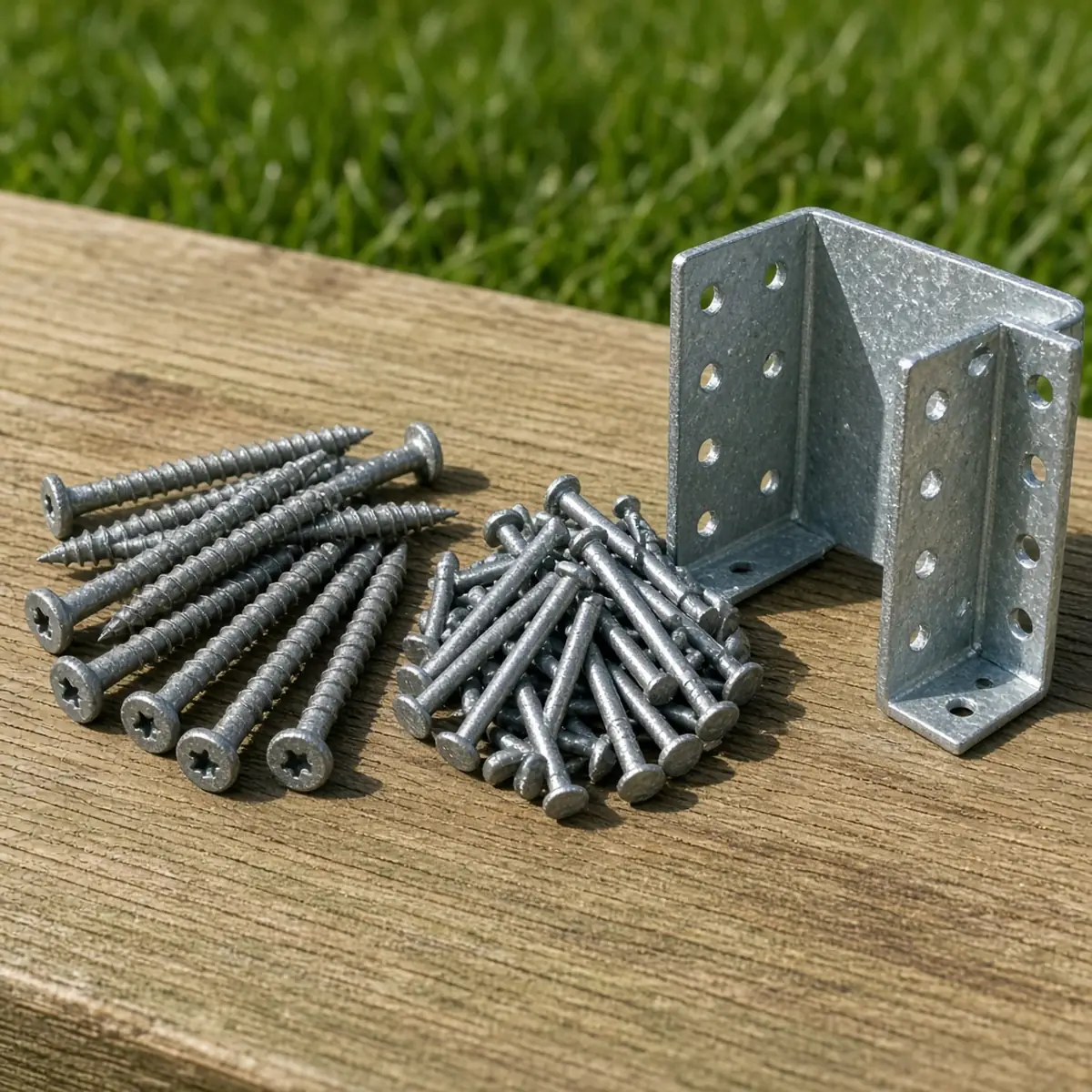
On a Collegeville deck, structural framing connections use the fasteners the connector is rated for, which are specific joist-hanger nails or approved structural screws, never drywall or deck screws. Decking boards are fastened with corrosion-resistant deck screws or hidden clips. Every fastener in contact with pressure-treated lumber has to be hot-dipped galvanized or stainless to resist the treated wood and the climate.
Where Nails Belong
Nails still do structural work on a deck. Joist hangers and framing connectors are engineered for specific nails, and using the connector's rated nails is what gives the connection its load rating. Those nails resist the shear load a hanger sees. Smooth-shank nails are not used where withdrawal matters, like fastening decking, because they back out over time as the wood moves through the wet-dry cycle.
Where Screws Belong
Screws hold where withdrawal matters. Decking boards are screwed down so they do not pop up as the wood cycles through Collegeville's wet summers and dry winters, a problem that plagued nailed decking. Structural screws, which are different from basic deck screws, can replace lag bolts and nails in some rated connections. Hidden-fastener clips, used with composite and some wood, screw to the joist and grip the board edge.
The Corrosion Rule That Matters Most
Corrosion resistance is the rule Collegeville's climate makes non-negotiable. Pressure-treated lumber's preservatives corrode ordinary steel fasteners, and the area's 46.73 inches of annual rain speeds the rust. Code requires hot-dipped galvanized or stainless fasteners and connectors in contact with treated wood. The wrong fastener rusts, bleeds stains down the boards, and weakens the connection, which is a common failure found on older Collegeville decks.
| Location | Fastener |
|---|---|
| Joist hangers / connectors | Connector-rated nails or structural screws, galvanized or stainless |
| Decking boards | Corrosion-resistant deck screws or hidden clips |
| Ledger to house | Structural lag screws or through-bolts, hot-dipped or stainless |
| Anywhere on treated wood | Hot-dipped galvanized or stainless only |
Why This Shows Up on Older Decks
Fastener failure is one of the most common problems on aging Collegeville decks. Many were built with smooth nails in the decking that have since backed out, or with the wrong steel fasteners that have rusted in the wet climate and left black stains. Re-fastening with the right corrosion-resistant screws and connectors is a routine part of bringing an older deck back to safe, which is why a repair checks every connection, not just the boards.
Frequently Asked Questions
Screws and nails each belong in different places on a Collegeville deck. Decking boards are better screwed down because screws resist the withdrawal that pops nailed boards as the wood cycles with the seasons. Structural connections like joist hangers use the connector's rated nails or structural screws, which carry the shear load. The right answer is to use each where the code and the connector call for it.
Pressure-treated wood requires hot-dipped galvanized or stainless-steel fasteners and connectors because the preservatives in the lumber corrode ordinary steel. In Collegeville's wet climate this is critical, since the 46.73 inches of annual rain speeds any rust. Using the wrong fastener leads to corrosion, black staining down the boards, and a weakened connection, so code specifies corrosion-resistant hardware throughout.
No, basic deck screws should not be used in joist hangers on a Collegeville deck because they are not rated for the shear load the connection carries. Joist hangers are engineered for specific connector nails or approved structural screws that give the connection its load rating. Using the wrong fastener in a hanger undermines the structural connection even if it looks secure.
Nailed deck boards pop up because smooth-shank nails lose their grip as the wood swells and shrinks through Collegeville's wet summers and drier winters. Each cycle works the nail out a little until the board end lifts into a trip hazard. Screws resist that withdrawal, which is why decking is screwed down and popped nails are a common repair on older decks.
Rust stains on a Collegeville deck come from fasteners that are not corrosion-resistant reacting with the pressure-treated wood and the wet climate. Ordinary steel screws or nails corrode, and the rust bleeds down the board as a black or brown streak. The fix is to replace them with hot-dipped galvanized or stainless fasteners, which is part of restoring an older deck.
Call Now for a Deck Fastened to Code in Collegeville, PA
For a deck built or repaired with the right fasteners in Collegeville, call (610) 904-7404 to reach a local pro. See custom deck building in Collegeville or start with a deck builder in Collegeville.