
How Deep Do Deck Footings Go in Pennsylvania?
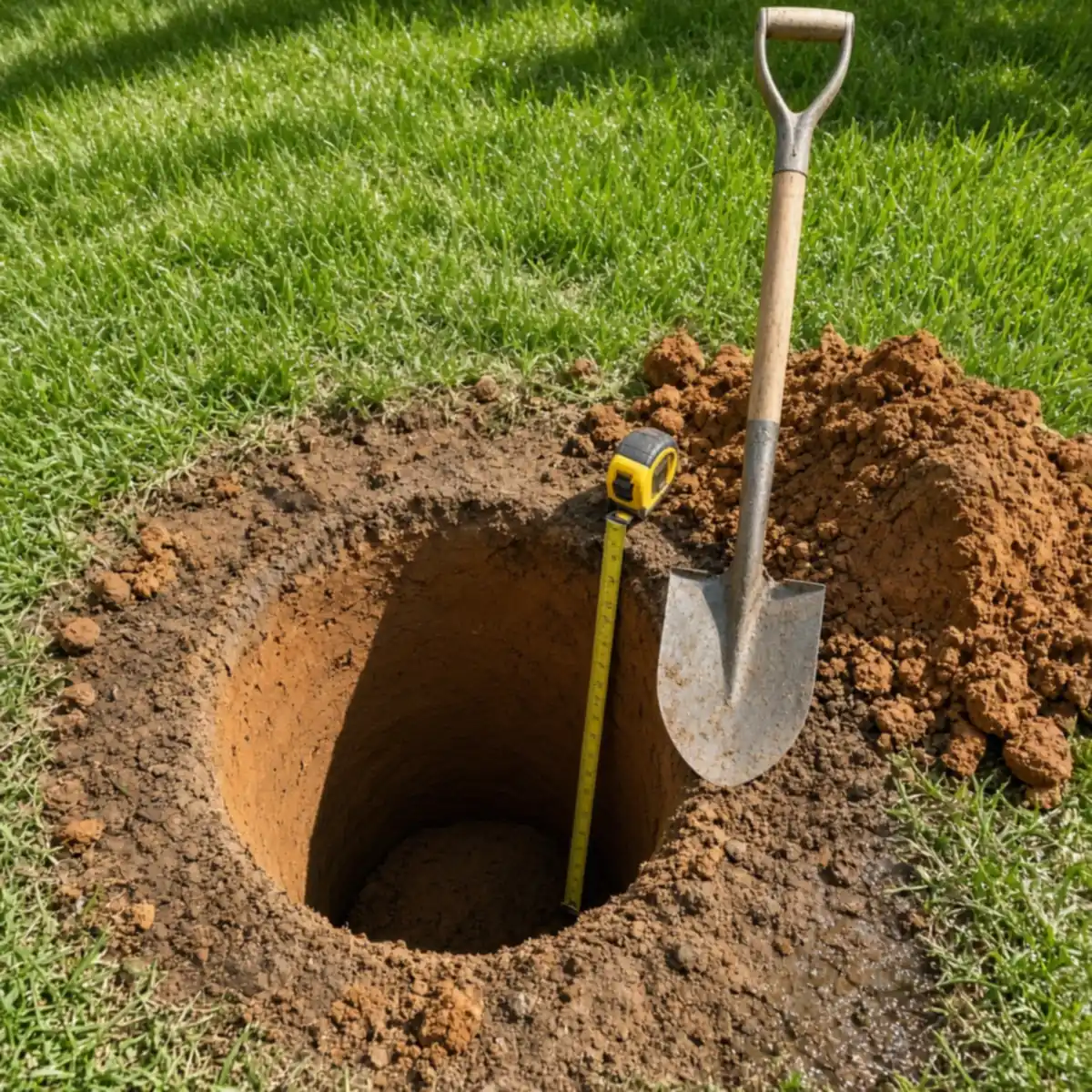
Deck footings in Pennsylvania go at least 36 inches deep, below the frost line that runs across the southeastern part of the state. In the Collegeville area, that 36-inch depth is what stops frost heave from lifting the deck over the winter. This guide explains the frost-line rule, why it matters, and how the footing inspection works before any concrete is poured.
- Permit & inspections handled
- Footings below the 36″ frost line
- Code-height 36″ guardrails
- Independent local professionals
The Short Answer
A deck footing in the Collegeville area has to reach at least 36 inches below grade, the frost-line depth for southeastern Pennsylvania. Footings set shallower than that sit inside the zone where the ground freezes and thaws, and that movement lifts and drops the posts, racking the frame and pulling the deck away from the house. Going below the frost line puts the footing on ground that stays stable through the winter.
Why the Frost Line Sets the Depth
The frost line is the deepest point the ground freezes in a normal winter. When wet soil freezes it expands, and anything resting inside that frozen zone gets pushed up. In the Collegeville area, with a NOAA annual mean temperature around 55 degrees at the nearby Phoenixville station and cold winter stretches, the ground freezes to roughly 36 inches. A footing poured to the bottom of that depth bears on soil that does not freeze, so it stays put while the ground above it moves.
What a Code Footing Looks Like
A footing built to Pennsylvania code is more than a deep hole. The hole is dug to at least 36 inches, a concrete footing is poured at the bottom, and a post base anchors the post to the concrete above grade so the wood is not sitting in soil. The diameter is sized to the load the post carries, which is why a covered deck or a deck carrying a roof needs larger footings than a bare platform.
| Footing detail | Pennsylvania standard |
|---|---|
| Minimum depth | 36 inches, below the frost line |
| Bearing | On solid, undisturbed soil |
| Post connection | Anchored to concrete, not buried in soil |
| Diameter | Sized to the post load |
How the Footing Inspection Works
The footing inspection is the one that catches the most problems. First, PA One Call (811) is notified three days before digging so utilities are marked. Second, the holes are dug to depth and left open. Third, the inspector checks the depth, the diameter and that the holes bear on solid soil, all before any concrete is poured. Finally, once the inspection passes, the footings are poured and the framing starts. A deck that pours before the inspection can be ordered opened back up.
How to Find a Builder Who Gets Footings Right
Footings are hidden once the deck is up, so the builder's habits matter. A good Collegeville deck builder digs to 36 inches, books the footing inspection before pouring, and uses post bases that keep the wood off the soil. When hiring, ask how deep the footings go and whether the inspection is scheduled before the pour. See custom deck building in Collegeville for how the footing stage fits the build.
Frequently Asked Questions
Pennsylvania deck footings have to reach about 36 inches because that is the frost-line depth in the southeastern part of the state, including the Collegeville area. Soil above the frost line freezes and expands in winter, lifting anything inside it. A footing poured below 36 inches bears on soil that stays unfrozen, so the deck does not heave and rack over the cold months.
Shallow deck footings in the Collegeville area heave when the ground freezes and thaws, which lifts the posts unevenly and over time racks the frame, cracks the boards, and pulls a ledger away from the house. The damage shows up as a deck that no longer sits level or a gap opening at the house wall. Re-footing a heaved deck is far more work than digging to depth the first time.
No, deck footings in Collegeville are inspected before the concrete is poured, with the holes dug and left open so the inspector can confirm depth, diameter and soil bearing. Pouring before the inspection defeats the check, and the borough can require the work to be opened back up. The footing inspection is scheduled into the build before any concrete arrives.
Most decks in the Collegeville area need footings below the frost line because they carry a structural load and connect to the house. A small, free-standing, ground-level platform can fall under lighter requirements, but any deck more than 30 inches above grade or attached to the house needs proper footings. The borough and the permit process confirm what a specific deck requires.
Deck footing diameter in Pennsylvania is sized to the load each post carries, not a single fixed number, so a footing under a beam carrying a large span or a roof is wider than one under a light corner post. The footing has to spread the load onto soil rated to carry it. A builder sizes the footings from the deck's framing plan and the local soil bearing.
Call Now for a Code-Footed Deck in Collegeville, PA
If you want a deck footed to last the freeze-thaw in Collegeville, call (610) 904-7404 to reach a local pro. See how the footing stage runs with a deck builder in Collegeville.